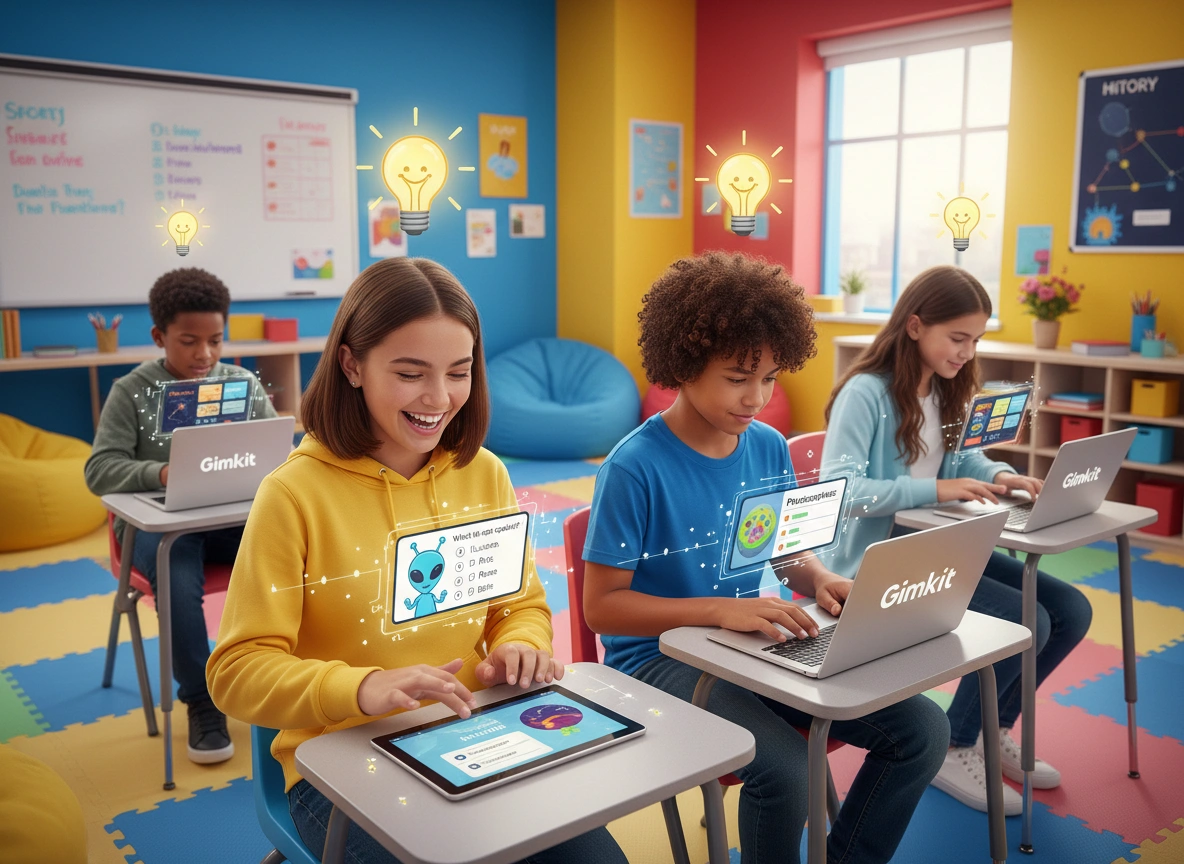
Educators are constantly searching for innovative tools that not only engage students but also improve learning outcomes. One of the biggest challenges is ensuring that students don’t just memorize facts for a test, but truly retain information for the long term. This is where gamified learning platforms like Gimkit are making a significant impact. By transforming traditional review sessions into exciting, competitive games, Gimkit helps students anchor knowledge more effectively, leading to better and longer retention.
This article explores how Gimkit’s unique approach to learning enhances memory. We will look at its core features, the science behind its effectiveness, and how it caters to a wide range of students. By the end, you will understand why this tool has become a favorite in modern classrooms for boosting student engagement and recall.
What is Gimkit and How Does It Work?
Gimkit is an interactive digital quiz game platform designed for the classroom. At its heart, it functions like a flashcard or quiz tool, but with a strategic twist. Students answer questions on their own devices, earning in-game currency for correct answers. They can then use this currency to purchase power-ups and upgrades, introducing a layer of strategy that goes beyond simple right-or-wrong responses.
The process is straightforward. An educator creates a “Kit,” which is a set of questions and answers on a specific topic. Students join the game using a unique code and compete individually or in teams to reach a goal, whether it’s earning a certain amount of money, reaching the end of a race, or working together to defeat a “boss.”
The fast-paced nature of the games, combined with the strategic element of spending in-game cash, keeps students highly engaged. This isn’t just a passive review; it’s an active, competitive experience that captivates their attention from start to finish.
The Power of Gamification on Memory Retention
To understand why Gimkit is so effective, we need to look at the psychology of gamification and its connection to memory. Gamification applies game-design elements to non-game contexts, and education is one of its most successful applications. Several key principles explain why this approach works.
Active Recall and Spaced Repetition
Gimkit is built on two of the most proven methods for strengthening memory: active recall and spaced repetition.
- Active Recall: Instead of passively rereading notes, students must actively retrieve information from their brains to answer questions. This act of pulling out a memory strengthens the neural pathways associated with it. Each time a student answers a question in Gimkit, they are practicing active recall, making the memory stronger and more durable.
- Spaced Repetition: Research consistently shows that we remember information better when we review it at increasing intervals over time. While Gimkit itself doesn’t automatically schedule reviews, its design encourages repeated play. Many teachers use the same Kit for quick review sessions over several days, naturally incorporating spaced repetition and helping to transfer information from short-term to long-term memory.
The Role of Dopamine in Learning
When students play Gimkit, they experience a cycle of challenge, achievement, and reward. Answering a question correctly, buying a powerful upgrade, or taking the lead in the game triggers a release of dopamine in the brain. Dopamine is a neurotransmitter associated with pleasure, motivation, and, importantly, memory.
When an educational experience is enjoyable, the brain is more likely to pay attention and encode the information being presented. The excitement of a Gimkit game essentially tells the brain, “This is important and fun—remember it!” This emotional connection to the learning material helps solidify memories far more effectively than a standard worksheet.
Key Gimkit Features That Enhance Retention
Gimkit’s specific features are intentionally designed to maximize engagement and, as a result, retention. The platform moves beyond a simple quiz format by integrating mechanics that keep students invested in the material.
A Variety of Engaging Game Modes
Gimkit is not a one-size-fits-all tool. It offers numerous game modes that cater to different classroom dynamics and learning objectives. Modes like “Trust No One” (similar to the popular game Among Us) or “The Floor is Lava” require students to answer questions correctly to survive or succeed.
This variety prevents learning from becoming monotonous. A teacher can use a classic mode for a straightforward review one day and a cooperative mode like “Humans vs. Zombies” the next to encourage teamwork. By changing the context in which students interact with the material, Gimkit forces them to think about the information in different ways, which reinforces their understanding.
In-Game Currency and Strategic Upgrades
The introduction of in-game currency is arguably Gimkit’s most innovative feature. It transforms a quiz into an economic simulation. Students don’t just answer questions; they make strategic decisions. Should they spend their money on an upgrade that increases their earnings per question? Or save up for a power-up that allows them to freeze a competitor’s screen?
This strategic layer requires higher-order thinking. Students are not just recalling facts; they are managing resources, assessing risks, and planning ahead. This deeper level of cognitive engagement means they are more focused on the task, which naturally leads to better retention of the academic content at the core of the game.
KitCollab: Student-Centered Content Creation
Gimkit’s “KitCollab” feature allows students to contribute to the creation of the quiz itself. The teacher sets the topic, and students add their own questions. This process is a powerful learning tool because it requires students to identify key concepts, formulate clear questions, and provide correct answers.
By taking on the role of the creator, students engage with the material on a much deeper level. They are not just consumers of information but active participants in building the learning experience. This ownership fosters a stronger connection to the content, making it more memorable.
Supporting Different Learning Styles in the Classroom
A significant benefit of Gimkit is its ability to appeal to a diverse range of learners. Traditional classroom methods often favor certain learning styles, but Gimkit’s dynamic nature provides multiple entry points for student success.
- Kinesthetic Learners: These students learn by doing. The fast-paced, interactive nature of Gimkit, which requires constant tapping and decision-making, keeps them physically engaged.
- Visual Learners: The colorful interface, progress bars, and on-screen alerts provide constant visual feedback. Seeing their “cash” total rise or their character advance in a race helps them track their progress.
- Auditory Learners: While primarily visual, Gimkit games often create a buzz of excitement in the classroom. Teachers can read questions aloud, and students often discuss strategies and answers, adding an auditory layer to the experience.
- Competitive and Collaborative Learners: For students motivated by competition, the leaderboards and head-to-head nature of many modes are highly engaging. For those who thrive on teamwork, cooperative modes encourage communication and shared goals.
By accommodating these different preferences, Gimkit ensures that more students can connect with the material in a way that works best for them, removing barriers to learning and retention.
Conclusion: A Valuable Tool for Lasting Knowledge
Gimkit is more than just a fun game to play in the classroom. It is a thoughtfully designed educational tool that leverages the science of learning to help students retain information longer. By combining active recall, the motivational power of gamification, and features that encourage strategic thinking, it transforms rote memorization into a dynamic and memorable experience.
Its ability to engage a wide spectrum of learners and turn review sessions into an event that students look forward to makes it an invaluable asset for any educator. In a world where capturing and holding student attention is half the battle, Gimkit provides a powerful solution that delivers both engagement and lasting educational impact. It helps teachers achieve the ultimate goal: to build a foundation of knowledge that students carry with them long after the test is over.
