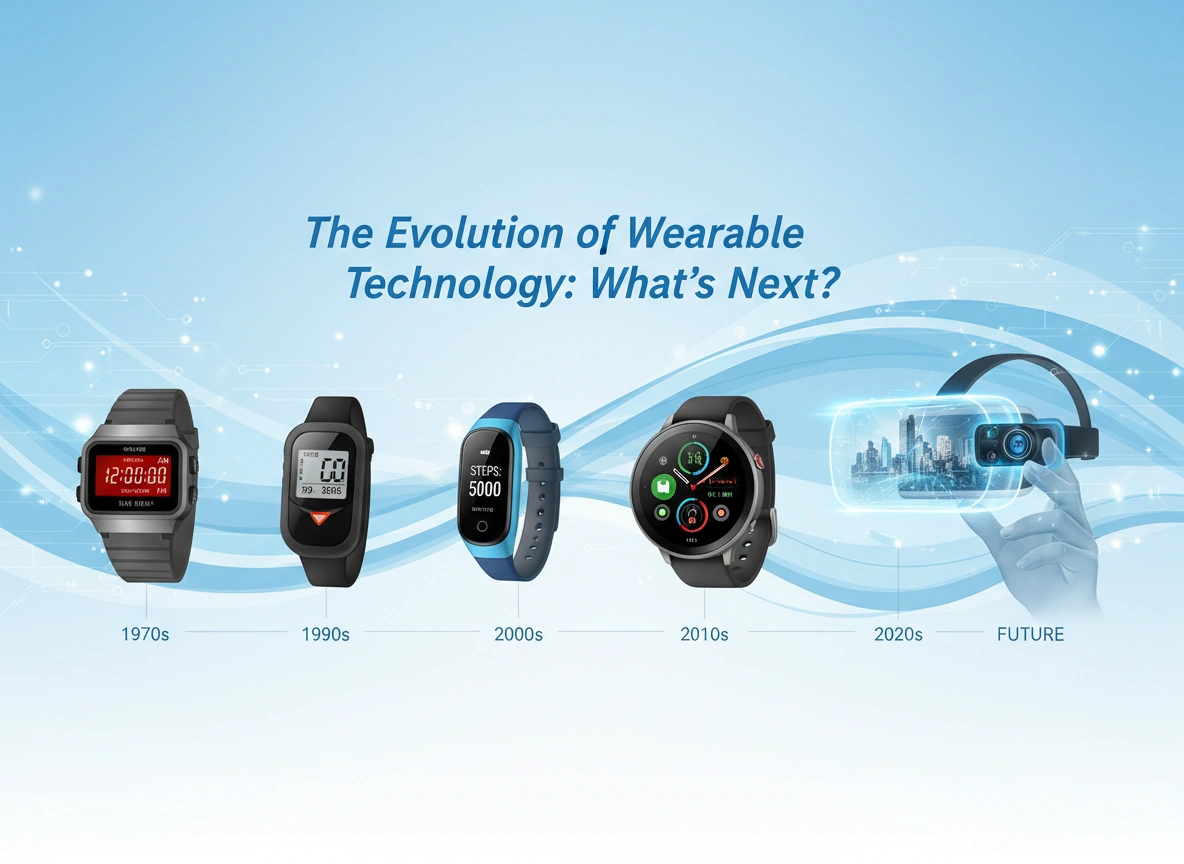
Remember when the calculator watch was the coolest gadget you could strap to your wrist? It felt futuristic, almost spy-like. We have come a long way since punching tiny rubber buttons to solve math problems. Today, wearable technology is an integral part of our daily lives, seamlessly blending fashion with powerful functionality. It tracks our heartbeats, navigates our routes, and even immerses us in virtual worlds. But how did we get here, and more importantly, where is this technology taking us next?
This article explores the journey of wearable tech from humble beginnings to sophisticated health companions. We will examine the current landscape of smart devices and dive deep into the innovations shaping the future, from AI-powered health diagnostics to the ethical challenges we must face.
From Novelty to Necessity: A Brief History
Wearable technology isn’t as new as you might think. While we often associate it with the digital age, the concept of enhancing human capability through worn devices dates back centuries. However, the modern lineage of wearables began with specific, purpose-built tools.
The Early Pioneers
The 1960s and 70s saw the first true attempts at wearable computing. The 1970s brought us the Pulsar Calculator Watch, a status symbol that signaled the wearer was tech-savvy. In the 1980s, the Sony Walkman revolutionized how we consumed media on the go, a precursor to the personal tech bubbles we live in today.
The Fitness Revolution
The real turning point came in the late 2000s and early 2010s. Fitbit launched its first tracker in 2009, a simple device that clipped onto your clothes. It didn’t do much by today’s standards—mostly counting steps—but it gamified movement. Suddenly, 10,000 steps became a global goal. This era proved that people wanted data about their own bodies. They wanted quantification.
The Smartwatch Era
Then came the Apple Watch in 2015. Skeptics wondered if we really needed a “phone on our wrist.” The answer turned out to be a resounding yes, but not for the reasons initially thought. While notifications were convenient, the health monitoring capabilities—heart rate tracking, ECGs, and fall detection—transformed the smartwatch from a luxury accessory into a life-saving device.
The Current Landscape: More Than Just Steps
Today, wearable technology has moved beyond simple tracking. It is about holistic health, seamless connectivity, and augmented reality.
Health at the Forefront
Modern wearables are essentially medical-grade devices for the masses. The Oura Ring tracks sleep stages and body temperature with remarkable accuracy. The latest Garmin watches can assess your “Body Battery,” telling you when to rest and when to push. We aren’t just counting calories anymore; we are monitoring stress levels, blood oxygen saturation (SpO2), and heart rate variability (HRV). This shift has turned patients into active participants in their own healthcare.
Immersion and AR
Beyond the wrist, the face is the new frontier. Smart glasses have had a rocky start (remember Google Glass?), but companies like Meta and Snap are refining the concept. The Ray-Ban Meta smart glasses allow users to capture photos and listen to music without breaking eye contact with the world. Meanwhile, headsets like the Apple Vision Pro are pushing the boundaries of “spatial computing,” blending digital content with physical space in high fidelity.
Specialized Wearables
The market is also diversifying. We now have smart clothing with sensors woven into the fabric to track muscle activity. Hearables (smart earbuds) can translate languages in real-time and filter out specific noises. The ecosystem is vast, specialized, and increasingly invisible.
Industry Impact: Transforming How We Live and Work
The ripple effects of these devices extend far beyond individual users. Entire industries are reshaping their operations around wearable data.
Healthcare: The Shift to Preventative Care
The impact on healthcare is profound. Remote patient monitoring allows doctors to track chronic conditions without constant hospital visits. Continuous glucose monitors (CGMs) have changed the lives of millions with diabetes, providing real-time blood sugar data without finger pricks. Insurers are even offering lower premiums for policyholders who share their fitness data, incentivizing a healthier population.
Fitness and Professional Sports
In professional sports, wearables are non-negotiable. Coaches analyze player load to prevent injuries before they happen. In the consumer fitness world, platforms like Peloton and Apple Fitness+ use real-time biometric data to tailor workouts. The gym is no longer a place you go; it’s a service you wear.
Entertainment and Gaming
Virtual Reality (VR) headsets have created entirely new genres of entertainment. It is no longer just about watching a movie; it is about being inside it. Haptic suits allow gamers to “feel” the virtual world, adding a tactile layer to digital experiences. This technology is also being used for virtual tourism, allowing people to explore the Louvre or hike Mount Everest from their living rooms.
What’s Next? The Future of Wearables
As we look toward the horizon, the separation between human and machine will likely blur even further. The future isn’t just about smaller watches; it’s about integration, intelligence, and invisibility.
1. Artificial Intelligence Integration
AI is the engine that will drive the next generation of wearables. Currently, your watch tells you that your heart rate is high. In the future, AI will tell you why and what to do about it. Imagine a virtual health assistant that analyzes your sleep, stress, and calendar, then suggests the optimal time for a deep work session or a nap.
Generative AI will also make voice assistants on wearables actually useful. Instead of simple command-response interactions, you will have fluid conversations with your smart glasses or earbuds, asking complex questions and receiving summarized answers instantly.
2. The Move to “Invisibles”
The goal of future hardware is to disappear. We are moving toward “ambient computing,” where the technology is omnipresent but unobtrusive.
- Smart Tattoos: Researchers are developing electronic skin patches and smart tattoos that can monitor biomarkers like lactate or hydration levels directly from sweat.
- Smart Contact Lenses: Imagine contact lenses that display navigation arrows on the road in front of you or monitor your intraocular pressure for glaucoma.
- Implantables: While controversial, chips like Neuralink aim to bridge the gap between the brain and computers directly. While mass adoption is far off, the medical applications for restoring mobility or communication are groundbreaking.
3. Energy Harvesting
Battery life remains the Achilles’ heel of wearable tech. The future lies in energy harvesting—powering devices using the body’s own heat, movement, or solar energy. Smartwatches that never need charging because they run on your body heat could revolutionize the user experience, making health tracking truly continuous (24/7/365).
4. Emotional Intelligence
Future wearables won’t just know your heart rate; they will know your mood. By analyzing voice tone, skin conductance, and facial expressions (via inward-facing cameras on glasses), devices could detect anxiety or depression. This could trigger real-time interventions, such as guiding the user through breathing exercises or suggesting a break.
Challenges and Considerations
With great power comes great responsibility. The rapid advancement of wearable tech brings significant hurdles that we must address.
Data Privacy and Security
The more data we collect, the more vulnerable we become. Health data is incredibly sensitive. Who owns the data generated by your smart ring? Can it be sold to advertisers? What happens if a health insurer denies coverage based on data from your watch? Ensuring robust encryption and clear user ownership rights is critical.
E-Waste and Sustainability
As we upgrade our devices every year or two, we generate massive amounts of electronic waste. Making wearables sustainable—using recycled materials, ensuring repairability, and designing for longevity—is a major challenge for manufacturers.
The Digital Divide
There is a risk that advanced health monitoring becomes a privilege of the wealthy. If the best preventative care requires a $500 watch and a monthly subscription, health disparities could widen. Ensuring equitable access to these life-saving technologies is a moral imperative.
Conclusion
The evolution of wearable technology has been nothing short of extraordinary. We have moved from simple pedometers to sophisticated health labs on our wrists. The future promises even more integration, with AI-driven insights, invisible hardware, and immersive experiences that will fundamentally change how we interact with the world and ourselves.
However, as we embrace these advancements, we must remain vigilant about privacy, sustainability, and equity. The goal of wearable technology shouldn’t just be to collect more data, but to help us live happier, healthier, and more human lives. The next chapter isn’t just about what we wear; it’s about who we become when we wear it.
Please visit website for more info.