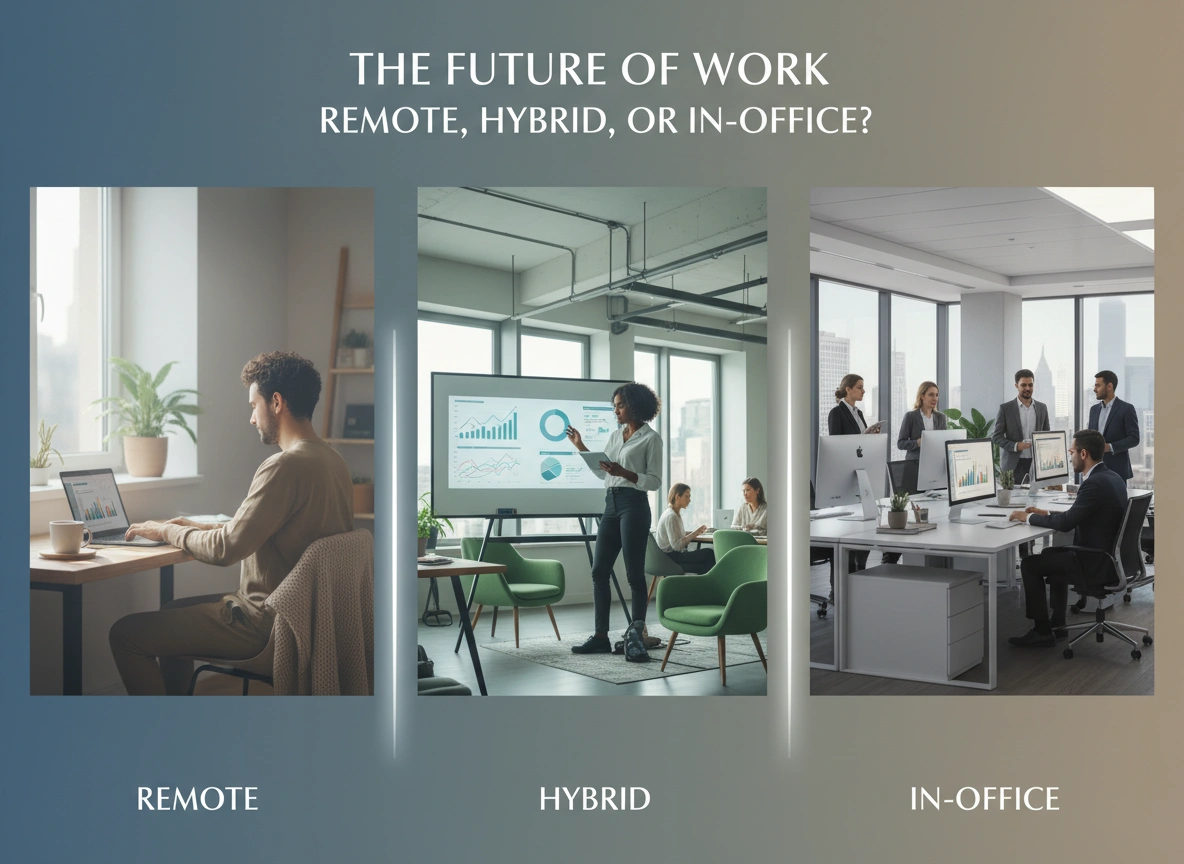
The traditional five-day, in-office work week once stood as an unquestioned pillar of professional life. Today, that foundation is shifting. Organizations worldwide are reevaluating where, when, and how work gets done, leading to a pivotal debate: Should the future be fully remote, entirely in-office, or a hybrid of the two? The answer is complex, shaped by factors ranging from employee well-being and productivity to technological capabilities and the fundamental nature of company culture. Understanding the nuances of each model is crucial for leaders navigating this new landscape.
This article will explore the evolution of modern work environments, dissecting the advantages and disadvantages of remote, hybrid, and in-office models. We will examine the core elements influencing these decisions—productivity, employee satisfaction, technology, and culture—and offer insights to help businesses find their ideal balance.
The Evolution of the Workplace
The concept of remote work is not new, but the global events of the early 2020s acted as an unprecedented catalyst, forcing a worldwide experiment in distributed work. What began as a temporary measure quickly revealed both the potential and the pitfalls of working outside a traditional office. As restrictions eased, companies faced a choice: return to the old ways, embrace a fully remote future, or forge a new path with a hybrid approach. This has led to a fundamental reassessment of the office’s role, moving its purpose from a mandatory location to a potential resource for collaboration, connection, and culture-building.
Decoding the Work Models: Pros and Cons
Each of the three dominant work models presents a unique set of benefits and challenges. The right choice depends heavily on an organization’s industry, goals, and workforce demographics.
The Fully In-Office Model
The traditional model requires all employees to work from a central, physical location during set business hours. For decades, this was the default for most industries.
Pros:
- Spontaneous Collaboration: In-person environments facilitate unplanned interactions and brainstorming sessions that can spark innovation.
- Stronger Culture and Onboarding: Immersing new hires in a physical office can accelerate their integration into the company culture and provide clear access to mentorship.
- Clear Supervision: Managers can more easily observe work habits, provide immediate feedback, and address issues as they arise.
- Dedicated Infrastructure: Companies provide and maintain the necessary equipment, secure networks, and ergonomic setups for all employees.
Cons:
- Geographical Limitations: The talent pool is restricted to individuals willing and able to commute to the office location.
- Higher Overhead Costs: Businesses must bear the significant expenses of real estate leases, utilities, and office maintenance.
- Commuting and Rigidity: Daily commutes can contribute to employee stress, expenses, and a poorer work-life balance. The fixed schedule offers little flexibility.
The Fully Remote Model
In a fully remote setup, employees work from a location of their choice, connected to their colleagues and tasks through digital tools.
Pros:
- Global Talent Pool: Companies can hire the best talent from anywhere in the world, without geographical constraints.
- Increased Flexibility and Autonomy: Employees often report higher satisfaction due to greater control over their schedules and work environments, leading to improved work-life integration.
- Reduced Operational Costs: Eliminating or downsizing office space leads to substantial savings on rent, utilities, and other associated expenses.
- Potential for Higher Productivity: Without office distractions and commute times, many employees find they can focus more deeply and accomplish more.
Cons:
- Risk of Disconnection and Isolation: Employees may feel disconnected from their teams and the company culture, leading to loneliness and reduced morale.
- Collaboration Challenges: Spontaneous collaboration is more difficult. Virtual meetings can lead to “Zoom fatigue,” and not all tasks translate well to a digital format.
- Home Office Disparities: Not all employees have access to a suitable, quiet, and well-equipped workspace at home, creating inequality.
- Security and IT Concerns: Managing data security and providing IT support across a distributed network of personal devices and home internet connections is complex.
The Hybrid Model
The hybrid model attempts to combine the best of both worlds, allowing employees to split their time between working in the office and working remotely.
Pros:
- Structured Flexibility: It offers employees the autonomy they desire while retaining the in-person connection and collaboration that the office provides.
- Wider Talent Attraction: While not fully global, it broadens the talent pool to include those in a wider commutable radius who may not want a five-day-a-week commute.
- Optimized Office Use: Companies can potentially downsize their real estate footprint, redesigning offices as hubs for collaboration rather than rows of desks.
- Balanced Work-Life Integration: Employees can enjoy focused work at home and collaborative energy in the office, potentially boosting both productivity and satisfaction.
Cons:
- Complexity in Scheduling: Coordinating who is in the office and when can be a logistical nightmare, especially for collaborative tasks.
- Proximity Bias: There is a risk that managers may unconsciously favor employees they see more frequently in the office over their remote counterparts for promotions and opportunities.
- Equity and Experience Gaps: The experience can be inconsistent. Remote employees might feel left out of impromptu office conversations, creating an “us vs. them” dynamic.
- Technological Demands: It requires a seamless technology stack that ensures all employees, regardless of location, can participate equally in meetings and projects.
Key Factors Influencing the Decision
Choosing a model isn’t just a matter of preference; it’s a strategic decision that impacts the entire organization. Leaders must weigh several critical factors.
Productivity and Performance
One of the biggest debates centers on productivity. While many studies suggest that remote workers are as productive, if not more so, than their in-office counterparts, this is not universal. Productivity depends on the individual’s role, work style, and home environment. For tasks requiring deep, focused concentration, remote work is often superior. For roles dependent on rapid, collaborative problem-solving, an in-person setting may be more effective. Businesses must move away from measuring presence and instead focus on measuring outcomes and results.
Employee Satisfaction and Well-being
Flexibility has become a non-negotiable benefit for many workers. A lack of flexibility is a leading reason for employees seeking new opportunities. Offering remote or hybrid options can significantly boost morale, reduce burnout, and improve employee retention. However, companies must also proactively address the risks of remote work, such as isolation and the blurring of boundaries between work and personal life, by promoting clear communication and mental health support.
The Role of Technology
Technology is the backbone of any modern work model. For remote and hybrid setups to succeed, organizations must invest in robust and integrated tools for communication (e.g., Slack, Microsoft Teams), project management (e.g., Asana, Trello), and collaboration (e.g., Miro, Google Workspace). Furthermore, cybersecurity becomes paramount when employees are accessing sensitive company data from various locations and networks. A successful hybrid model demands “location-agnostic” technology, ensuring a seamless and equitable experience for everyone.
Preserving and Evolving Company Culture
How does a company build and maintain its culture when employees are not physically together every day? This is a primary concern for leaders leaning toward an in-office mandate. A remote or hybrid culture must be built intentionally. This involves establishing new rituals, promoting transparent communication, and creating virtual and in-person opportunities for social connection. The office can be reimagined as a cultural hub—a place for significant events, team-building activities, and major project kickoffs, rather than just daily tasks.
The Path Forward: Predictions and Recommendations
The “one-size-fits-all” approach to work is a relic of the past. The future is likely to be dominated by the hybrid model, but its implementation will vary widely. We will see less-rigid mandates and more team-led decisions about when and why to use the office.
For businesses navigating this transition, here are some recommendations:
- Listen to Your Employees: Don’t impose a top-down decision. Survey your workforce to understand their needs, preferences, and challenges. Use this data to inform your strategy.
- Focus on Intentionality: Define the purpose of the office. Is it for collaboration, client meetings, or individual work? Design your hybrid policy and office space around this purpose.
- Invest in Technology and Training: Equip your teams with the right tools to succeed, regardless of location. Train managers to lead distributed teams, focusing on outcomes, trust, and preventing proximity bias.
- Iterate and Adapt: Your first hybrid policy will not be your last. Treat it as an experiment. Collect feedback, monitor key metrics (productivity, engagement, retention), and be willing to adjust your approach over time.
Ultimately, the debate over remote, hybrid, or in-office work is about more than just location. It’s a conversation about trust, flexibility, and how to create an environment where employees can do their best work and live fulfilling lives. The organizations that thrive will be those that embrace this change with intention, empathy, and a willingness to build a new future of work, together.
Please visit this website for more info